Literary Feminist Novelist
Acacia Leaf Press
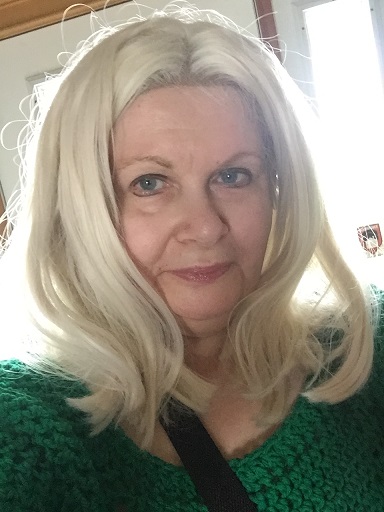
Question 1: Do you, as an author, have a unique background different from most authors?
Answer: I did not have any family support, or mentors and guides. In my adult life, I only encountered people who tried to silence me. I was buried alive. I needed to experience some degree of healing before I could write freely.
Question 2: What would you say about your writing?
Answer: My writing is character-based. Though my books are dark, violent and explicit, those elements are balanced by humor and tenderness. I create complex, richly-woven plots with wounded, passionate characters, whose struggles and triumphs I share.
Question 3: What are some recurring themes in your books?
Answer: Childhood trauma, grief and loss, misogyny, elitism, homophobia, and the healing power of friendship and community.
Question 4: Who would be most interested in reading your books?
Answer: Readers who are interested in delving into social issues and reading books that go beyond the surface of daily life, those who have been the victim of abuse and discrimination, and anyone who has been victimized would find my books relevant.
Question 5: What made you decide to go indie? Answer: My books are like my children. I was uncomfortable with the idea of other people changing them to suit their own tastes and purposes. I wanted to preserve them in their pure form. I wanted to maintain my copyright and wished to have control over the entire process. I did not make any attempts to query publishers. Literary fiction is quite rare within the indie community. Most authors specialize in genre fiction. Fortunately, my literary books have been selling in the U.S., U.K., Australia, New Zealand, European countries and parts of Asia and South Africa.
Question 6: When you self-publish, do you do it all yourself?
Answer: My daughter, Lyla, does all the typing, formatting, and technical support. I write, research, and edit. My husband, Leo, does the accounting.
Question 7: Are there any specific authors whose writing styles or subject matter inspired you as an author?
Answer: Joyce Carol Oates and Elizabeth Bowen.
Question 8: Who were your heroes growing up?
Answer: Dr. Joyce Brothers. She defied gender stereotypes, pursued her dreams, and overcame obstacles, all the while maintaining her integrity and authenticity.
Question 9: What has made you the proudest of yourself?
Answer: Surviving the first sixty years of my life. I had absolutely no support, nurturing, kindness or stability. No one had my back. I lived through every type of abuse and trauma imaginable.
Question 10: What trait do you most admire about yourself?
Answer: My high level of sensitivity. This is ironic, because it was that sensitivity which made my pain deeper, but it was also my sensitivity which connected me to other wounded souls and fueled my writing, which was the only escape I had from my horrific circumstances.
Question 11: What qualities are you most critical of in yourself? Answer: Lack of practicality (100% right brain), and bluntness when my patience is tried.
Question 12: What are the greatest misconceptions people have about you?
Answer: Some people perceive my sensitivity as a weakness and my gentleness as being indicative of lacking in a high level of intellectual capacity. They underestimate my intelligence and strength. Then, some interpret my introversion as coldness and arrogance, because I tend to be stoic in unsafe environments. There are also others who observe only my fun-loving side and think I’m child-like.
Question 13: What quality do you most despise in others?
Answer: Charming and manipulating others for one’s own benefit.
Question 14: What is your writing background?
Answer: I started writing poetry at age four and won first prize in multiple children’s competitions in Europe. It followed a visit to my mother’s professor, who was a poet. He asked me if I wrote poetry. I told him I created stories in my head. He said: “You are going to write poetry.” Then, two days later, I woke up with all these poems on my mind and needed to get them down. The following day, my mother called her professor to tell him, but his housekeeper told her he had passed away the day before.
When I was eight, a book of my poetry was published by the publisher that sponsored the competitions. The publisher commissioned a designer in Germany to design the cover with my artwork. My poems were adapted to radio plays and I made numerous public appearances. I was an avid reader from a young age, with a preference for adult literature; I did not have much interest in children’s books. When I was ten, my father’s decision to emigrate to Canada ended that phase of my career.
In high school, I won Honorable Mention in two Canada-wide short story competitions. Later in my life, I was the editor of The Cormorant for one year, and a board member of both The Cormorant and Writers Federation of New Brunswick. My poetry was published in The Cormorant and my article and personal essay appeared in other publications. Two of my plays were workshopped by Theater New Brunswick.
My true passion all along was producing novels with relevant messages from the time I was twelve. I researched how to plan and write a novel at that time and began working on earlier and more innocent versions of the books from my SOULLESS Series (SCORPIONS HUNT BY NIGHT, SANDCASTLES IN THE RAIN, SUMMER IS A SHORT SEASON, SUMMER’S ECHO). I wrote plays which were performed at my middle school. I only wanted to play characters who were either disabled or elderly. I co-wrote a play with a student teacher in both English and French, and sang a solo in French during a school assembly. I produced several novellas which were read by school friends, teachers and neighbors. From the age of eleven, all of my writing was for adults with only adult characters. I was forced to grow up too fast, so I did not know what it was like to be a child. I did not write about my own experiences. I was more interested in other people’s stories, lives, feelings, and I wanted to put myself in their shoes and immerse myself in their lives.
Question 15: Tell us a couple of amusing anecdotes.
Answer: The first anecdote was when I was four, shortly after I won poetry competitions, my parents had my I.Q. tested, and they were told I was gifted. My mother decided to try to enroll me at her university to study art. She booked an appointment and we were met by a stern-looking man who took me into a room with a breathtaking view of the sea. He proceeded to place a bust of Julius Caesar on the table, gave me some paper and pencils, and told me to draw him. I was left alone in that room for a considerable amount of time. I desperately wanted to create a pastel painting of the view, instead of a black and white sketch of a grumpy man, but I knew I had to do what I was told. After what seemed like an eternity, the man returned with my parents to judge my work. He flew into a rage when he discovered what I had done and demanded to know why I had produced the work before him. My response was: “Uncle Caesar looked sad, so I wanted to cheer him up. That’s why I dressed him up like Shirley Temple.” I had given Julius Caesar ringlets and bows in his hair, and a collar with ruffles. Needless to say, the man told us in no uncertain terms to get lost and never darken their doorstep again.
The second anecdote happened in middle school. There was a spring dance everyone was excited to attend. Our teacher, Sister Forrestell asked me if I was going. I told her I was not allowed to go. She told me to get ready and wait for her to pick me up. When I said “My dad is going to say no”, she answered: “No one says no to a nun in a habit.” She was right.
 SummerSelineCoyle.com